The ROI of Professional Photos for Short-Term Rentals: Data and Case Studies
Hard data on how professional listing photos impact nightly rates, occupancy, and revenue. Plus: how to get pro-quality results without pro-level costs.
Every short-term rental host faces a fundamental business question: where should I invest my limited budget to generate the highest return? Property improvements, amenity upgrades, dynamic pricing tools, cleaning services, professional photography --- all compete for the same dollars. And while every investment has its merits, the data consistently points to one area where the return dwarfs the cost: listing photography.
This is not a soft claim based on gut feeling. Multiple studies, Airbnb's own published data, and thousands of host experiences tell the same story. Better photos lead to more bookings, higher nightly rates, and significantly more annual revenue. In this article, we examine the hard numbers, walk through three realistic case studies, and show how AI editing tools have fundamentally changed the cost-benefit equation for rental photography.
The Data: How Photos Impact Short-Term Rental Performance
Airbnb's Own Numbers
Airbnb has published several data points over the years about the impact of professional photography on listing performance:
- Hosts with professional photos earn up to 40% more revenue than comparable listings without them.
- Professional photos increase bookings by an average of 24% based on Airbnb's internal studies.
- Listings with professional photos are booked 26% more often per month than those without.
- Properties with 20+ photos outperform those with fewer images in both search ranking and booking conversion.
These are averages across Airbnb's global marketplace. In competitive markets --- urban centers, popular vacation destinations, areas with high listing density --- the impact of photography can be even more pronounced because the visual comparison between listings is more direct.
Academic and Industry Research
Beyond Airbnb's data, several hospitality and real estate studies have examined the photo-performance relationship:
- A Cornell University hospitality study found that image quality was the single strongest predictor of booking intent for vacation accommodations, outranking price, location description, and review score.
- Research published in the International Journal of Hospitality Management found that high-quality listing images increased willingness to pay by 15-20% compared to low-quality images of the same properties.
- A 2024 analysis by AirDNA found that listings with recently updated photos (within the past 6 months) had 17% higher occupancy rates than listings with stale photo sets.
The Click-Through Factor
Before photos affect your booking rate, they affect your click-through rate from search results. Airbnb search results are predominantly visual --- guests see your cover photo, price, and rating. If your cover photo does not earn the click, nothing else about your listing matters.
Data from short-term rental marketing firms suggests that upgrading a cover photo alone can increase listing click-through rates by 30-50%. This upstream improvement cascades into more page views, more booking inquiries, and more confirmed reservations.
The Cost Breakdown: Professional Photography vs. Alternatives
Understanding the ROI of rental photography requires understanding the costs of different approaches.
Option 1: Professional Photographer
- Cost: $200-500 per session (varies by market and photographer experience)
- What you get: 20-40 professionally shot and edited photos, typically delivered in 3-7 business days
- Pros: Highest technical quality, experienced eye for composition and staging
- Cons: Highest upfront cost, scheduling logistics, weather dependency, no easy way to update individual shots
- Best for: Luxury properties, new listings where first impressions matter most, hosts with the budget to reshoot seasonally
Option 2: DIY Photography (No Editing)
- Cost: $0 (assumes you have a smartphone)
- What you get: Variable quality depending on your skill, equipment, and lighting conditions
- Pros: Free, immediate, easy to reshoot anytime
- Cons: Typically lower quality than professional alternatives, inconsistent look across photos, no correction of camera limitations
- Best for: Budget-constrained hosts as a temporary solution
Option 3: DIY Photography + Manual Editing
- Cost: $0-20/month for editing software (Lightroom, Snapseed, etc.) plus 2-4 hours of your time per property
- What you get: Improved photos with corrections for brightness, color, and tone
- Pros: Good results are achievable with practice, full creative control
- Cons: Steep learning curve, time-intensive, difficult to maintain consistency, results depend on skill level
- Best for: Hosts with photography interest and time to invest in learning
Option 4: DIY Photography + AI Editing
- Cost: $5-20 per property set (varies by tool and number of photos)
- What you get: Professionally edited photos with consistent quality, advanced features like twilight conversion and sky replacement
- Pros: Professional results at a fraction of the cost, fast turnaround (minutes, not days), easy to update individual photos, no skill required
- Cons: Starting photos still need to be reasonably well-composed
- Best for: The majority of hosts who want professional results without professional costs or time investment
The cost differential is stark. A professional photographer at $350 per session, shooting each of your properties twice a year (seasonal updates), costs $700 per property per year. AI editing of your own photos costs $10-40 per property per year. If the quality gap between these two approaches is narrow --- and with modern AI tools, it increasingly is --- the cost-efficiency of Option 4 is compelling.
For a detailed comparison of available AI editing tools, see our guide to the best real estate photo editing software in 2026.
Case Study 1: The Urban Studio Apartment
The Property
Sarah manages a modern studio apartment in Austin, Texas. The 450-square-foot unit is well-located near downtown, clean, and competitively priced at $89/night. Despite positive reviews (4.6 stars, 28 reviews), her occupancy rate hovered around 55%, well below the market average of 68% for comparable units.
The Problem
Sarah's listing photos were taken with her iPhone in the evening after a guest checkout. The overhead kitchen lighting created a strong yellow cast across every image. The bathroom photos were dark and unflattering. The single exterior shot was taken on an overcast day, making the building look drab. None of the photos were edited.
The Investment
Sarah spent one morning reshooting her apartment during peak natural light (10 AM on a sunny day). She then used AI editing to batch-process all 22 photos: brightening interiors, correcting color temperature, and creating a twilight version of the building exterior. Total cost for AI editing: $8.
The Results (Over 6 Months)
| Metric | Before | After | Change |
|---|---|---|---|
| Monthly occupancy | 55% | 74% | +34% |
| Average nightly rate | $89 | $99 | +11% |
| Monthly revenue | $1,469 | $2,198 | +50% |
| Annual revenue impact | --- | --- | +$8,748 |
Sarah's $8 investment in AI editing, combined with a reshoot that cost nothing but her time, generated an estimated $8,748 in additional annual revenue. That is an ROI of over 100,000%.
Key Takeaway
The improvements were not dramatic on a per-photo basis. Each image simply went from "fine" to "good." But the cumulative effect of 22 better photos, led by a strong twilight hero shot, transformed the listing's performance. This is the power of consistency --- when every photo in your listing is solid, the overall impression is much greater than the sum of its parts.
Case Study 2: The Beachfront Vacation Home
The Property
Marcus and Jennifer own a three-bedroom beach house in Destin, Florida. The property's main selling points are its gulf view, private pool, and wraparound deck. It was listed at $275/night in peak season and $165/night in the off-season. Despite the strong property, bookings were inconsistent, with peak season occupancy at only 70% and off-season at 40%.
The Problem
The property had been photographed by a professional photographer two years earlier, but the photos had not been updated since. In the interim, the owners had renovated the kitchen, added new patio furniture, and upgraded the primary bedroom. None of these improvements were reflected in the listing photos. Additionally, the original photo set did not include any twilight or golden hour shots, and the pool photos were shot at midday with harsh shadows.
The Investment
The owners reshooting most rooms themselves over a weekend, focusing on the renovated spaces and outdoor areas at golden hour. They then used AI editing for the full set of 35 photos: bright and airy treatment for interiors, sky replacement for two overcast exterior shots, twilight conversion for the hero exterior, and enhanced pool photos. Total AI editing cost: $12.
The Results (Over 12 Months)
| Metric | Before | After | Change |
|---|---|---|---|
| Peak season occupancy | 70% | 89% | +27% |
| Off-season occupancy | 40% | 58% | +45% |
| Average nightly rate (peak) | $275 | $310 | +13% |
| Average nightly rate (off) | $165 | $185 | +12% |
| Annual revenue | $58,400 | $82,100 | +41% |
| Annual revenue impact | --- | --- | +$23,700 |
Key Takeaway
Two factors drove the dramatic improvement. First, the updated photos finally showed the property's actual current state, including renovations that had been invisible to potential guests. Second, the twilight hero shot and enhanced outdoor photography properly showcased the property's strongest features --- the view, pool, and outdoor living space --- which had been underrepresented in the original photo set.
The $23,700 annual revenue increase on a $12 editing investment underscores a critical point: for properties with strong features that are poorly photographed, the upside of better photos is enormous.
Case Study 3: The Multi-Property Host
The Property Portfolio
David manages 8 short-term rental units across Nashville --- a mix of downtown condos and houses in trendy neighborhoods. His portfolio generated combined annual revenue of roughly $380,000, but performance varied significantly across units. His best-performing property had an occupancy rate of 80% while his worst sat at 48%.
The Problem
David's photo quality was inconsistent across his portfolio. Two properties had been professionally photographed when they were first listed. The other six had DIY photos of varying quality, taken at different times of day with different phones. There was no visual consistency within individual listings or across the portfolio.
The Investment
David spent three weekends reshooting all eight properties using a systematic approach: same time of day (mid-morning), same staging principles, same shot list for each property type. He then batch-edited all photos --- roughly 200 images across eight properties --- using AI editing with a consistent "bright and airy" preset across the entire portfolio. He created twilight hero shots for all eight exteriors. Total AI editing cost: $45 across all properties.
The Results (Over 12 Months)
| Metric | Before (Portfolio) | After (Portfolio) | Change |
|---|---|---|---|
| Average occupancy | 62% | 78% | +26% |
| Average nightly rate | $168 | $189 | +13% |
| Annual portfolio revenue | $380,000 | $498,000 | +31% |
| Annual revenue impact | --- | --- | +$118,000 |
Key Takeaway
The consistency factor was transformative for David's portfolio. When all eight listings had the same professional visual quality, his entire brand elevated. Returning guests who booked one property were more likely to book another because the visual consistency signaled a consistent quality standard. His worst-performing property went from 48% to 71% occupancy, the largest single improvement in the portfolio.
For multi-property hosts, AI editing is not just a per-property efficiency gain --- it is a portfolio-wide branding tool.
Calculating Your Photo ROI
You can estimate the potential return on better photos for your own property using a simple framework.
Step 1: Determine Your Current Baseline
- Current monthly occupancy rate: ____%
- Current average nightly rate: $____
- Current monthly revenue: $____
Step 2: Estimate Conservative Improvement
Based on the data above, a conservative estimate for photo upgrade impact:
- Occupancy increase: 15-25% (relative increase, not percentage points)
- Nightly rate increase: 5-15%
For example, if your current occupancy is 60%, a 20% relative increase brings it to 72%. If your nightly rate is $150, a 10% increase brings it to $165.
Step 3: Calculate the Revenue Impact
- New monthly revenue: (new occupancy) x (days in month) x (new nightly rate)
- Monthly revenue increase: new monthly revenue minus current monthly revenue
- Annual revenue increase: monthly increase x 12
Step 4: Compare to Investment
- Professional photographer: $200-500 per session
- AI editing (DIY photos): $5-20 per property
- Your time for the reshoot: 2-4 hours
Even with a professional photographer at the high end ($500), most properties will recoup that investment within the first month of improved bookings. With AI editing, the payback period is measured in days, not months.
When to Hire a Professional vs. DIY
Despite the strong case for AI-powered DIY photography, there are situations where hiring a professional photographer is the better investment.
Hire a Professional When:
- Launching a new listing: First impressions are permanent. If you are listing a property for the first time, professional photos set a strong foundation.
- Luxury properties ($400+ per night): At higher price points, guests expect flawless presentation. The incremental quality of professional photography justifies the cost.
- Properties with complex lighting: Spaces with large windows facing different directions, multi-level open plans, or challenging interior layouts benefit from a photographer who can control lighting with external flashes and reflectors.
- You need architectural detail: If your property's selling point is its architecture --- a historic home, a designer renovation, a unique structure --- a professional will know how to capture those details most effectively.
DIY + AI Editing When:
- Updating an existing listing: You already have a baseline of bookings and want to improve incrementally.
- Managing multiple properties: The per-property cost of professional photography multiplied across a portfolio becomes prohibitive.
- Seasonal updates: You need to refresh photos multiple times a year and cannot justify a professional shoot each time.
- Budget-constrained: You need to maximize every dollar and are willing to invest time instead of money.
- Quick turnaround: You need updated photos immediately (post-renovation, post-staging, weather-dependent timing) and cannot wait for a photographer's schedule.
For most hosts, the optimal strategy is a hybrid: professional photography for the initial listing launch or a major renovation, followed by ongoing DIY + AI editing for updates, seasonal rotations, and individual room refreshes. This approach gives you the quality foundation of professional work with the flexibility and cost-efficiency of AI tools for maintenance.
How AI Editing Bridges the Gap
The reason AI editing has changed the photo ROI equation so dramatically is that it addresses the specific weaknesses of DIY photography without the costs of professional alternatives.
What AI Editing Fixes
- Exposure and brightness: The number one DIY photo problem, dark interiors, is corrected automatically
- Color accuracy: Yellow casts from indoor lighting are neutralized
- Dynamic range: The balance between bright windows and dark interiors is resolved, mimicking HDR without the over-processed look
- Consistency: Every photo in a set gets the same look and feel, creating a cohesive listing
- Sky conditions: Overcast or dull skies are replaced with natural-looking blue skies or dramatic sunset tones
- Twilight creation: A standard daytime exterior becomes a premium twilight hero shot
For a visual demonstration of these transformations, see our Airbnb before and after gallery.
What AI Editing Cannot Fix
AI editing is powerful but not magical. It cannot fix:
- Poor composition: A badly framed photo will still be badly framed after editing
- Clutter: Objects in the frame will remain in the frame
- Blur or motion: Out-of-focus photos cannot be made sharp
- Missing rooms: If you did not photograph it, AI cannot create it
This is why the combination of intentional shooting (following composition and staging best practices) and AI editing (correcting technical limitations) is so effective. You provide the raw material, and AI handles the technical polish.
For detailed shooting guidance, our Airbnb listing photo guide and vacation rental photography tips cover everything you need to know about capturing strong source images.
The Compound Effect of Better Photos Over a Year
The ROI of better photos is not just the immediate bump in bookings. It compounds over time through several mechanisms.
Higher Search Ranking
As better photos lead to more bookings and more positive reviews, your listing's search ranking improves. Higher rankings lead to more visibility, which leads to more bookings, which further improves your ranking. This virtuous cycle means the initial photo investment continues to pay dividends months and years later.
Better Reviews
When guests arrive at a property that looks as good as or better than its photos, they start the stay with a positive impression. This positive baseline leads to higher review scores, which lead to more bookings. Conversely, when photos overpromise and the property underdelivers, the review penalty can persist for months.
Price Elasticity
As your listing accumulates bookings and positive reviews --- driven initially by better photos --- you gain pricing power. You can incrementally raise your nightly rate because your listing's track record justifies the premium. A property that books at $150/night with average photos might sustain $175/night with excellent photos and the booking history they generate.
Reduced Vacancy Between Guests
Better photos do not just increase your total bookings --- they can also reduce the gaps between them. When your listing converts browsers at a higher rate, you fill calendar gaps faster. In a market where the average vacant night costs you $100-300 in lost revenue, even modest improvements in gap reduction add up significantly over a year.
The One-Year Math
Consider a property with a $200 average nightly rate and 60% occupancy:
- Current annual revenue: $200 x 365 x 0.60 = $43,800
- After photo upgrade (conservative: +20% occupancy, +10% rate): $220 x 365 x 0.72 = $57,816
- Annual revenue increase: $14,016
- Cost of AI editing: $10-20
- Five-year cumulative impact (with compounding from reviews and ranking): $80,000-100,000+
The numbers speak for themselves. Professional listing photos --- whether achieved through a photographer or through DIY shooting with AI editing --- are not a cost. They are one of the highest-returning investments a short-term rental host can make.
Take Action Today
You do not need a perfect plan to start improving your listing photos. The hosts who see the best results are the ones who take action, even imperfect action, rather than waiting for ideal conditions.
Start with your hero photo. If it is not exceptional, replace it. Reshoot on the next sunny morning. Edit with AI. Upload. Then work through the rest of your listing at your own pace, steadily raising the quality of every image.
The data is clear: better photos are the single highest-ROI investment in the short-term rental business. The only question is how quickly you want to start capturing that return.
For more strategies on maximizing your listing's performance, see our guides on Superhost photography secrets and HDR real estate photography. And for a detailed breakdown of what to charge and expect for professional photography services, check out our real estate photography pricing guide for 2026.
Related Articles
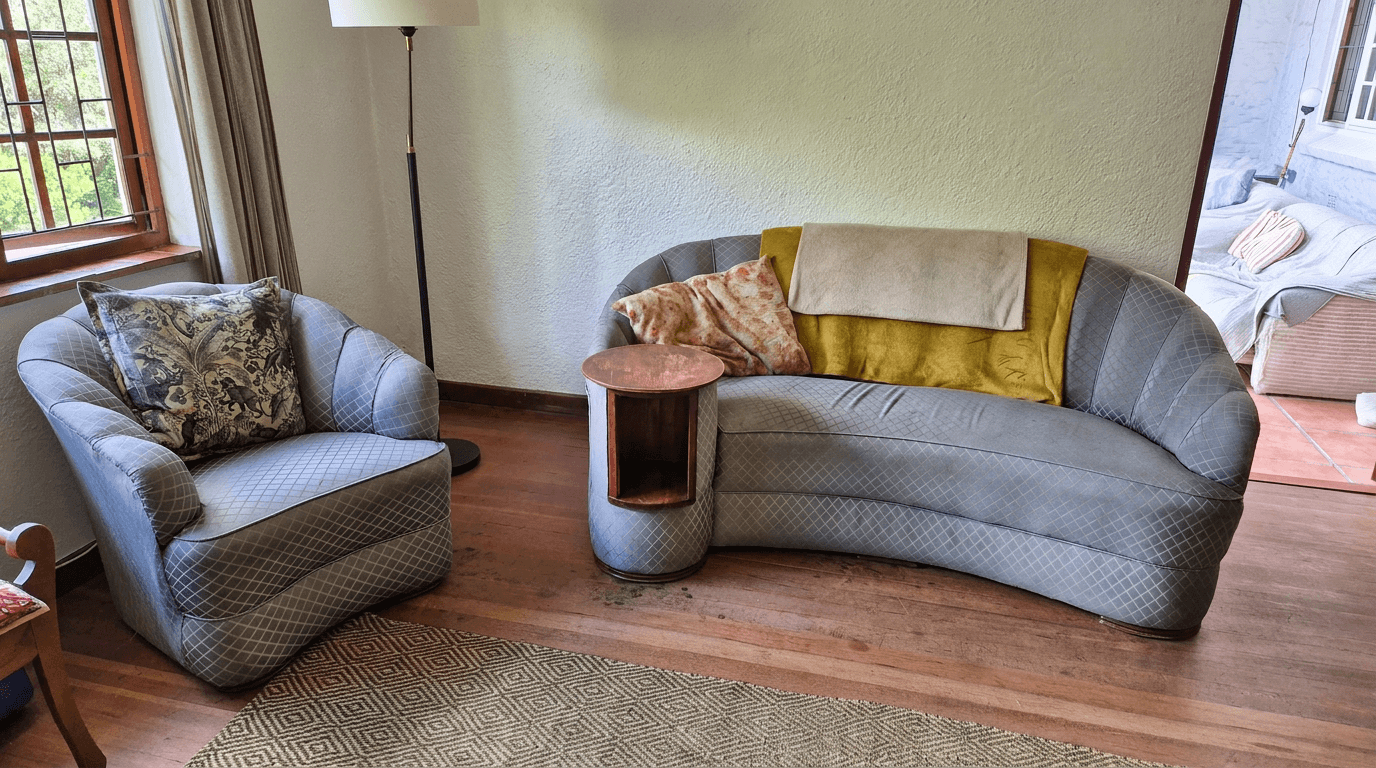
Airbnb Photo Editing: Before and After Transformations That Boost Bookings
See how AI photo editing transforms ordinary Airbnb photos into booking magnets. Real before-and-after examples for every room type.
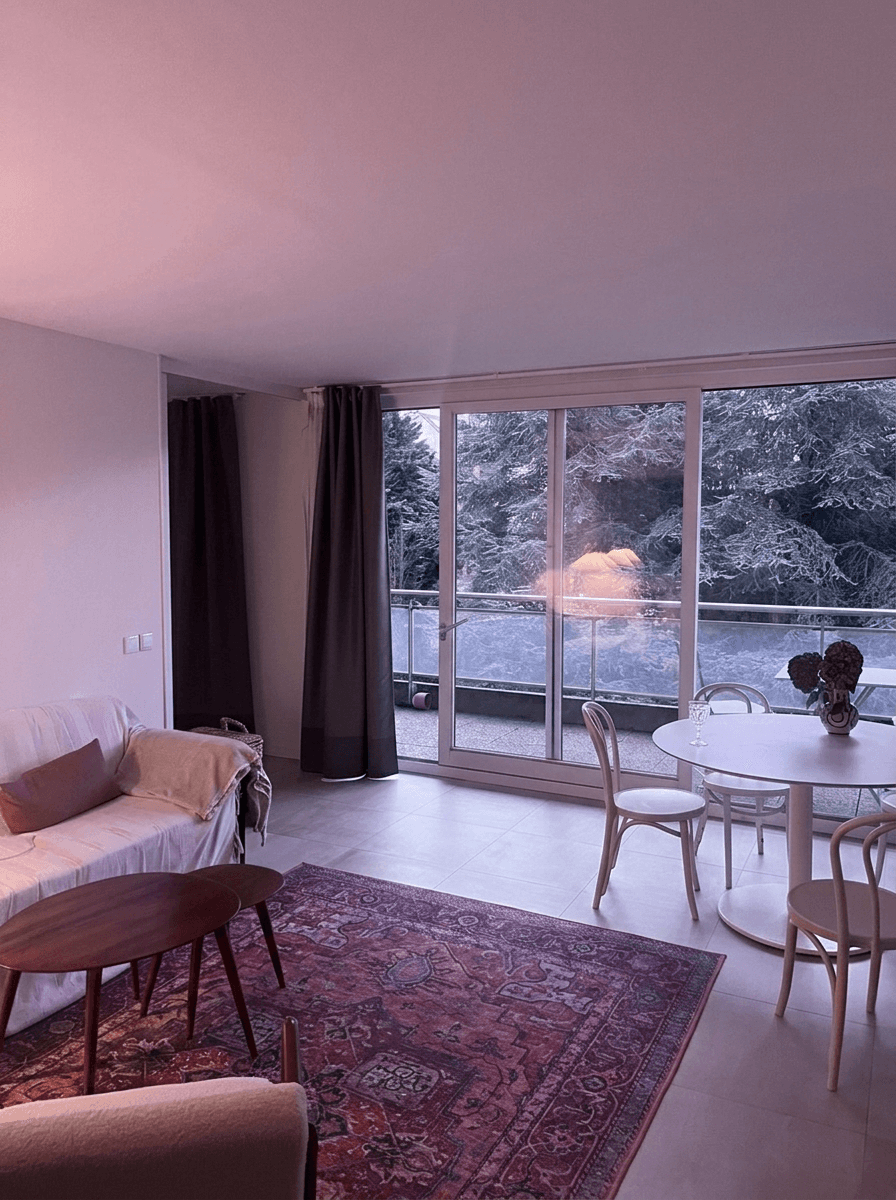
Airbnb Listing Photos That Actually Book: A Host's Complete Guide
Learn how to create scroll-stopping Airbnb photos that increase bookings by up to 40%. From composition to AI editing, everything hosts need to know.
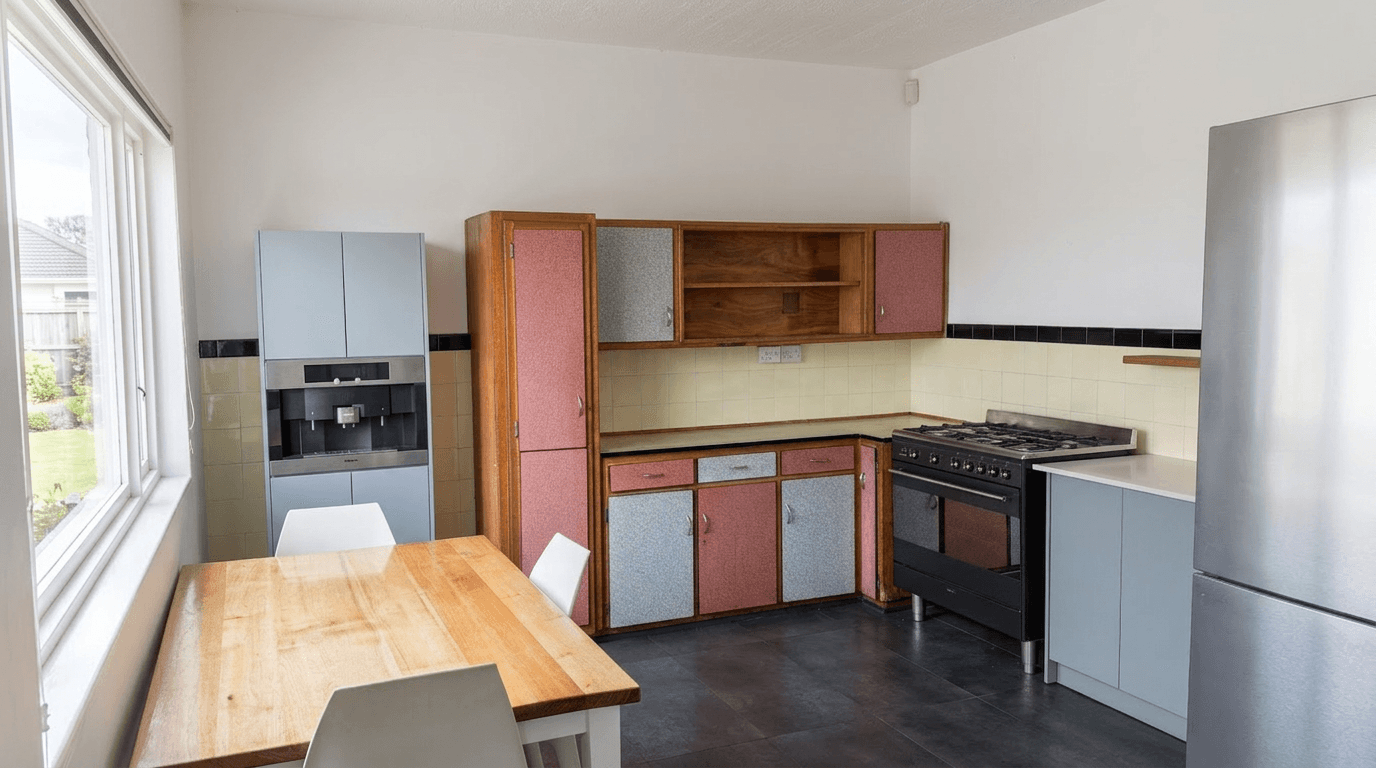
Photography for Unique Airbnb Properties: Treehouses, Tiny Homes, Boats, and Beyond
Master the art of photographing unique Airbnb properties including treehouses, tiny homes, boats, yurts, and glamping sites. Learn small-space techniques, outdoor photography tips, and how to capture the experience guests are booking.