Outsourcing Real Estate Photo Editing vs AI: Which Saves You More in 2026?
Outsourcing real estate photo editing vs AI: a cost and quality comparison of human editors and AI tools, with monthly cost tables and scenarios.
The real estate photo editing debate has shifted dramatically over the past two years. For a decade, the standard workflow was clear: shoot properties, upload images to an overseas editing team, and receive polished photos 12-24 hours later. It worked. It was affordable. And for many photographers, it was the only practical way to handle volume without spending entire evenings behind a screen.
Then AI-powered editing tools arrived and changed the math entirely. Platforms like Twilight can now deliver professional-quality real estate photo edits in about 30 seconds, with no human editor involved. The quality has reached a level where most viewers cannot distinguish between an AI-edited photo and one processed by an experienced human editor.
So which approach actually saves you more money, time, and headache in 2026? This guide breaks down the real costs, quality considerations, and practical tradeoffs to help you make an informed decision for your specific situation. Whether you are a solo photographer, a growing studio, or an agent editing your own photos, the right answer depends on your volume, workflow, and priorities.
The Current Landscape of Real Estate Photo Editing
Before diving into the comparison, it helps to understand the three primary approaches photographers use today.
Traditional Outsourcing
Outsourced editing services employ teams of human editors, typically based in Southeast Asia or South America, who process real estate photos according to your specifications. You upload raw or lightly processed images, provide editing notes or a style guide, and receive edited images back within a set turnaround window.
Popular services include BoxBrownie, PhotoUp, Snappr, and numerous smaller operations. Pricing typically ranges from $0.50 to $3.00 per image depending on the complexity of edits and the service provider.
AI-Powered Editing
AI editing platforms use machine learning models to analyze and transform real estate photos automatically. You upload a photo, select a preset or describe the desired edit, and receive a result in seconds. Twilight is an AI platform built specifically for real estate, though general-purpose AI editing tools also exist.
Pricing is typically subscription-based, with monthly plans that include a set number of edits. Per-edit costs range from approximately $0.15 to $0.60 depending on the plan and volume.
Manual Self-Editing
Some photographers still edit everything themselves using tools like Lightroom, Photoshop, or Capture One. While this gives maximum control, it is the most time-intensive approach and is increasingly difficult to justify as outsourcing and AI alternatives have improved. We include it in some comparisons below for context, but our primary focus is the outsourcing vs. AI decision.
Head-to-Head Feature Comparison
Let's compare outsourcing and AI editing across the factors that matter most to real estate photographers.
| Factor | Outsourcing (Human Editors) | AI Editing (Twilight) |
|---|---|---|
| Turnaround Time | 12-24 hours standard, 2-6 hours rush | About 30 seconds |
| Consistency | Varies by editor and shift | Identical processing every time |
| Quality Ceiling | Very high (skilled editors) | High (improving rapidly) |
| Complex Retouching | Yes (object removal, compositing) | Limited to preset capabilities |
| Revision Process | Resubmit with notes, wait 6-24 hours | Instant re-edit with adjusted settings |
| Communication | Written instructions, style guides | Preset selection or natural language |
| Scalability | Linear cost increase | Marginal cost decreases at volume |
| Learning Curve | Creating effective edit instructions | Minimal (presets handle complexity) |
| Weekend/Holiday | Reduced availability, longer turnaround | 24/7, instant availability |
| Customization | Highly flexible (anything a human can do) | Preset-based with custom prompt option |
| Quality Control | Requires your review of every image | Requires your review of every image |
| Setup Time | Days to weeks to train editors on your style | Minutes to select preferred presets |
Where Outsourcing Wins
Outsourcing still holds advantages in specific scenarios:
- Complex retouching. Removing power lines, adding fire to fireplaces, compositing multiple exposures, swapping out furniture, or editing reflections in mirrors and glass -- these tasks require human judgment and fine motor control that AI has not fully replicated.
- Highly customized editing styles. If you have a very specific editing style that does not match standard presets, a trained human editor can learn and replicate your unique look.
- Virtual staging. Adding furniture and decor to empty rooms requires creative decisions that are better handled by human editors, at least for now. Read more about virtual staging vs. photo editing in our dedicated guide.
- Unusual property types. Historic homes, ultra-luxury estates with complex interiors, or properties with unusual architectural features may benefit from an editor who can make nuanced judgment calls.
Where AI Editing Wins
AI editing has decisive advantages in the areas that affect day-to-day workflow most:
- Speed. This is the single biggest advantage. Getting results in 30 seconds versus 12-24 hours fundamentally changes your workflow. You can edit, review, and deliver during the drive home from a shoot.
- Consistency. Every image processed through the same preset receives identical treatment. No variation between editors, no quality fluctuation based on workload or fatigue.
- Cost at scale. As we will demonstrate in the cost analysis below, AI editing becomes dramatically cheaper per image as volume increases.
- Revision speed. If a result is not quite right, you can re-edit instantly with a different preset or adjusted prompt. No waiting, no back-and-forth communication.
- Availability. AI does not take holidays, does not have capacity limits, and does not have slower service on Monday mornings when every photographer from the weekend is uploading simultaneously.
- Sky replacement, HDR enhancement, and twilight conversion are specific edit types where AI now matches or exceeds average human editor quality consistently.
Try it free
Transform your first property photo in seconds, no account needed.
Monthly Cost Analysis
The real cost comparison becomes clear when you model it against specific volumes. Below, we break down what a real estate photographer or team would pay per month at three different volume levels.
Assumptions
For this analysis, we use the following baseline assumptions:
- Outsourcing cost: $1.50 per image (mid-range for quality service) with $5 per image for rush delivery
- Twilight pricing: Free (5 credits to start, no monthly refill), Starter $29/month (50 credits), Pro $79/month (200 credits), Agency $199/month (600 credits); credit packs from $12 with no plan. One credit is one edit at 1K.
- Self-editing time cost: $50/hour (photographer's effective rate), averaging 3 minutes per image for batch editing in Lightroom
Monthly Cost Comparison by Volume
| Monthly Volume | Outsourcing | Twilight (AI) | Self-Editing | Time Saved vs Outsourcing | Time Saved vs Self-Editing |
|---|---|---|---|---|---|
| 50 images | $75 | $29 (Starter) | $125 (2.5 hrs) | 12-24 hours | 2.5 hours |
| 200 images | $300 | $79 (Pro) | $500 (10 hrs) | 12-24 hours | 10 hours |
| 600 images | $900 | $199 (Agency) | $1,500 (30 hrs) | 12-24 hours | 30 hours |
Twilight prices as of October 2026. See pricing for current prices.
The 50-Image Photographer (Part-Time or New)
At 50 images per month -- roughly 2 listings -- the cost difference between outsourcing ($75) and Twilight ($29) is $46/month or $552/year. That is meaningful but not transformative.
However, the real value at this volume is turnaround time. A photographer shooting 2 listings per month is likely juggling real estate photography with other work. Waiting 24 hours for edited images means delaying delivery to the agent. With AI editing, you can deliver the same afternoon as the shoot, which can be a significant competitive advantage when agents are deciding between photographers.
The 200-Image Photographer (Full-Time)
At 200 images per month -- roughly 6-8 listings -- the numbers start to diverge more meaningfully. Outsourcing costs $300/month ($3,600/year) while Twilight costs $79/month ($948/year). That is a savings of $2,652 per year.
At this volume, a full-time photographer is likely delivering to multiple agents and needs consistent turnaround. The ability to edit and deliver within hours of a shoot -- rather than next-day -- can support faster listing launches and happier agent clients.
This is also the volume where outsourcing communication overhead becomes noticeable. Managing edit instructions, reviewing results, requesting revisions, and tracking deliveries across 6-8 listings per month consumes real time that does not show up in the per-image cost.
The 600-Image Operation (Studio or Team)
At 600 images per month -- a photography studio or team handling 20+ listings -- the economics strongly favor AI. Outsourcing costs $900/month ($10,800/year) versus Twilight at $199/month ($2,388/year). Annual savings: $8,412.
But the cost savings, as significant as they are, may not even be the primary driver at this volume. Studios processing 600 images per month through outsourcing are managing a complex logistics operation: uploading batches, tracking which shoots are in progress, handling revision requests, and occasionally dealing with missed deadlines or quality inconsistencies when their regular editor is unavailable.
With AI editing, the entire 600-image monthly volume can be processed by one person in a fraction of the time, with no dependency on third-party capacity or availability.
Real-World Workflow Comparison
To understand the practical difference, let's walk through a typical scenario: you have just finished shooting a 4-bedroom listing and have 35 images to deliver.
The Outsourcing Workflow
- Cull images on your computer (15-20 minutes)
- Upload to editing service with notes about style preferences (10-15 minutes)
- Wait 12-24 hours for delivery
- Review every image when delivered (15-20 minutes)
- Submit revision requests for 3-5 images that need adjustments (5-10 minutes)
- Wait 6-24 hours for revisions
- Final review and deliver to agent (10 minutes)
Total active time: 55-75 minutes Total elapsed time: 24-48 hours Agent receives photos: Next day at best, two days typical
The AI Editing Workflow
- Cull images on your computer (15-20 minutes)
- Upload to Twilight and apply preset (5-10 minutes)
- Review results (10-15 minutes)
- Re-edit any images that need adjustment (5 minutes)
- Deliver to agent (5 minutes)
Total active time: 40-55 minutes Total elapsed time: 40-55 minutes Agent receives photos: Same day, often within hours of the shoot
The active time difference is modest -- maybe 15-20 minutes saved. But the elapsed time difference is transformative. Same-day delivery versus next-day delivery is a meaningful competitive advantage in a market where agents are often under pressure to get listings live quickly.
The Hybrid Approach
Many photographers are finding that the optimal workflow in 2026 is a hybrid approach. Use AI editing for the 85-90% of images that need standard enhancements -- brightness, color correction, sky replacement, HDR balancing -- and reserve outsourcing for the 10-15% that need complex retouching like object removal, virtual staging, or advanced compositing. This gives you the speed and cost benefits of AI for the majority of your work while maintaining access to human editing skill for complex tasks.
Quality Comparison: Myths vs Reality
The most common concern about switching from outsourcing to AI editing is quality. Let's address this honestly.
Where Quality Is Equivalent
For the most common real estate photo edits, AI and human editors now produce equivalent results:
- Brightness and exposure correction. AI handles this as well as any human editor.
- Color balance and white balance. AI is actually more consistent here because it applies the same algorithm every time.
- Sky replacement. AI sky replacement has become remarkably sophisticated, with natural-looking blending and appropriate lighting adjustments.
- HDR blending. AI can balance interior and exterior exposures cleanly without the over-processed look that plagued early HDR.
- Twilight conversion. Converting daytime exteriors to twilight is one of the areas where AI has actually surpassed average human editor quality, because the algorithm consistently handles the complex lighting transitions correctly.
Where Human Editors Still Have an Edge
There are editing tasks where human judgment remains superior:
- Object removal in complex scenes. Removing a car from a driveway, a trampoline from a backyard, or personal items from a counter requires understanding of what should replace the removed object.
- Perspective correction judgment calls. Determining how much to correct converging verticals in a challenging composition sometimes requires aesthetic judgment.
- Creative color grading. Developing a unique editing style or matching a specific brand aesthetic is easier to communicate to a human editor than to encode in an AI prompt.
- Complex compositing. Creating flash-ambient blends, focus stacks, or multi-frame panoramas still requires human skill.
The Quality Gap Is Closing
It is worth noting that the quality comparison between AI and human editors is a moving target, and it is moving in one direction. AI editing quality in early 2026 is significantly better than it was in 2024, and it will likely be better still by 2027. Several editing tasks that required human editors two years ago -- like natural-looking sky replacement and balanced HDR processing -- are now handled as well or better by AI.
For real estate photographers considering the switch, the question is not whether AI quality will eventually match human editors across all tasks. It already matches for the majority of standard editing. The question is whether the remaining 10-15% of tasks where humans still excel is significant enough to justify the higher cost and slower turnaround of outsourcing everything.
Scalability and Growth Considerations
If you are building a photography business, scalability matters. How does each approach grow with you?
Outsourcing Scalability
Outsourcing scales linearly. Double your volume, double your cost. At very high volumes, you may negotiate modest volume discounts (5-15%), but the fundamental economics do not change. You also face practical constraints:
- Editor capacity. Your dedicated editor can only process so many images per day. As you grow, you may need multiple editors, increasing the risk of inconsistency.
- Communication overhead. More listings mean more edit instructions, more reviews, more revision cycles.
- Holiday and weekend bottlenecks. When you have 10 shoots on a Saturday but your editing team runs reduced capacity on weekends, you hit a bottleneck.
AI Scalability
AI editing scales far more favorably:
- Marginal cost decreases. Higher-tier plans reduce the per-edit cost. Going from 50 to 600 images per month with Twilight drops the per-image cost from $0.58 to $0.33.
- No capacity constraints. Process 10 images or 100 images in a sitting with identical speed.
- No quality variance at scale. Image #600 of the month gets the same processing quality as image #1.
- Team access. Multiple photographers on a team can use the same account simultaneously without competing for editor bandwidth.
For photographers with growth ambitions, AI editing removes one of the key scaling bottlenecks in the traditional photography business model.
Get started free
Create your free account and get 5 credits to start editing.
When Outsourcing Still Makes Sense
Despite the clear advantages of AI editing for standard real estate work, there are scenarios where outsourcing remains the better choice:
Complex Retouching Requirements
If your standard deliverables include heavy retouching -- removing clutter, patching damaged areas, compositing multiple exposures manually -- human editors are still the way to go for those specific tasks. Read more about the best editing software options for these workflows.
Very High-End Creative Work
Luxury listings, architectural portfolios, and editorial-style real estate photography may require the kind of nuanced, creative editing that an experienced human editor provides. The premium cost is justified when the photography itself is a premium service commanding $1,000+ per shoot.
Established Editor Relationships
If you have spent years training an editor who knows your style perfectly and delivers consistent results, there is value in that relationship. The transition cost of switching to AI -- even temporarily -- may not be worth it if your current workflow is working well and your costs are manageable.
Team Training and Standardization
Some studios use outsourcing partners as a way to enforce editing standards across a team of photographers. The editing service becomes the quality control layer that ensures consistent output regardless of which photographer shot the property.
Making the Switch: Practical Advice
If you are currently outsourcing and considering a move to AI editing, here is a practical transition plan.
Step 1: Test with Low-Stakes Shoots
Start by running AI editing alongside your existing outsourcing workflow. Edit the same set of images through both Twilight and your outsourcing service, then compare the results side by side. This gives you a clear quality comparison with your own images.
Step 2: Identify Your AI-Ready Edits
Categorize your typical edits. Standard brightness/color/sky work is immediately AI-ready. Complex retouching stays with outsourcing for now.
Step 3: Transition Gradually
Move your standard edits to AI first while keeping your outsourcing service for complex work. This is the hybrid approach mentioned earlier, and it is how most photographers make the transition.
Step 4: Optimize Your AI Workflow
Spend time learning which Twilight presets work best for your shooting style. Test custom prompts for recurring edit types. Develop a workflow that is as efficient as possible.
Step 5: Evaluate and Adjust
After a month of hybrid workflow, assess: What percentage of images are you editing with AI? What is your total cost compared to full outsourcing? Are agents noticing any quality difference? Use this data to decide whether to go fully AI or maintain a hybrid approach.
The Verdict: What Makes Sense in 2026
The answer depends on your situation, but the trend is unmistakable: AI editing has become the better choice for the majority of real estate photographers for the majority of their editing needs.
Choose AI editing (Twilight) if:
- Speed of delivery is important to your business
- You process 50+ images per month and want to reduce costs
- Consistency across listings matters to you
- You want to eliminate dependency on third-party turnaround times
- Your editing needs are primarily standard real estate enhancements
- You are building or scaling a photography business
Choose outsourcing if:
- Your standard deliverables require complex retouching
- You have an established, well-trained editor relationship
- Your editing style is highly unique and not replicable with presets
- Your primary work is ultra-luxury or editorial
- You are comfortable with 12-24 hour turnaround times
Choose a hybrid approach if:
- Most of your work is standard but you occasionally need complex retouching
- You want the speed of AI for daily work with the safety net of human editors for complex projects
- You are transitioning from outsourcing and want to minimize risk
For the typical real estate photographer shooting 4-10 listings per month, the AI editing approach will save $1,000-$8,000 per year in editing costs while cutting delivery times from next-day to same-day. That is a compelling combination that is hard to argue against, and it is why AI editing adoption has accelerated so rapidly across the industry.
The pricing calculator in our pricing guide can help you model the exact costs for your specific volume and workflow.
View pricing
Credit packs from $12, plans from $29 a month.
Related Articles
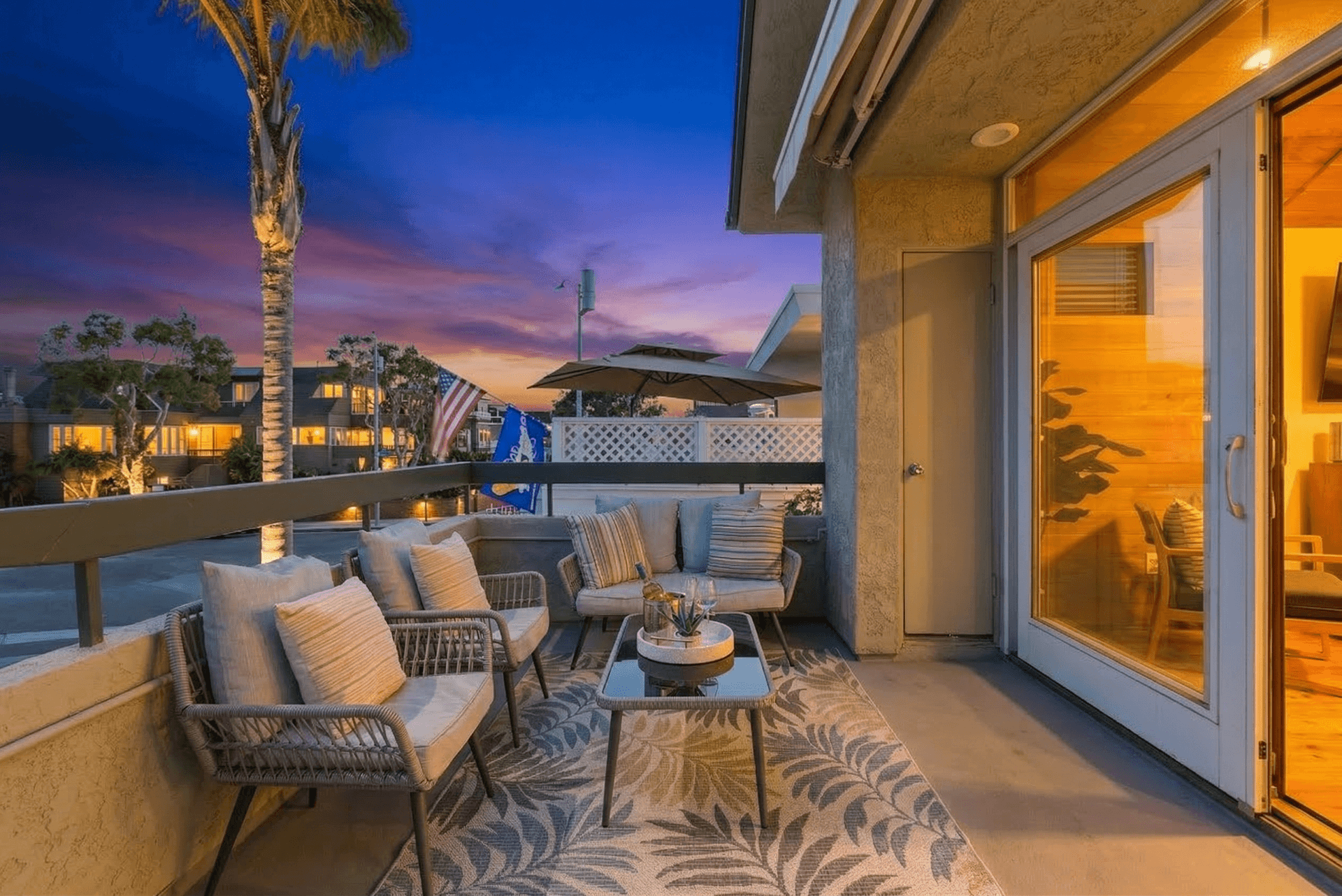
AI Image Models Compared for Real Estate: Nano Banana, Flux, SDXL, DALL-E 3, and Imagen
AI image models for real estate photo editing, compared: Nano Banana, Flux, SDXL, DALL-E 3 and Imagen 3, tested on the edits agents actually need.
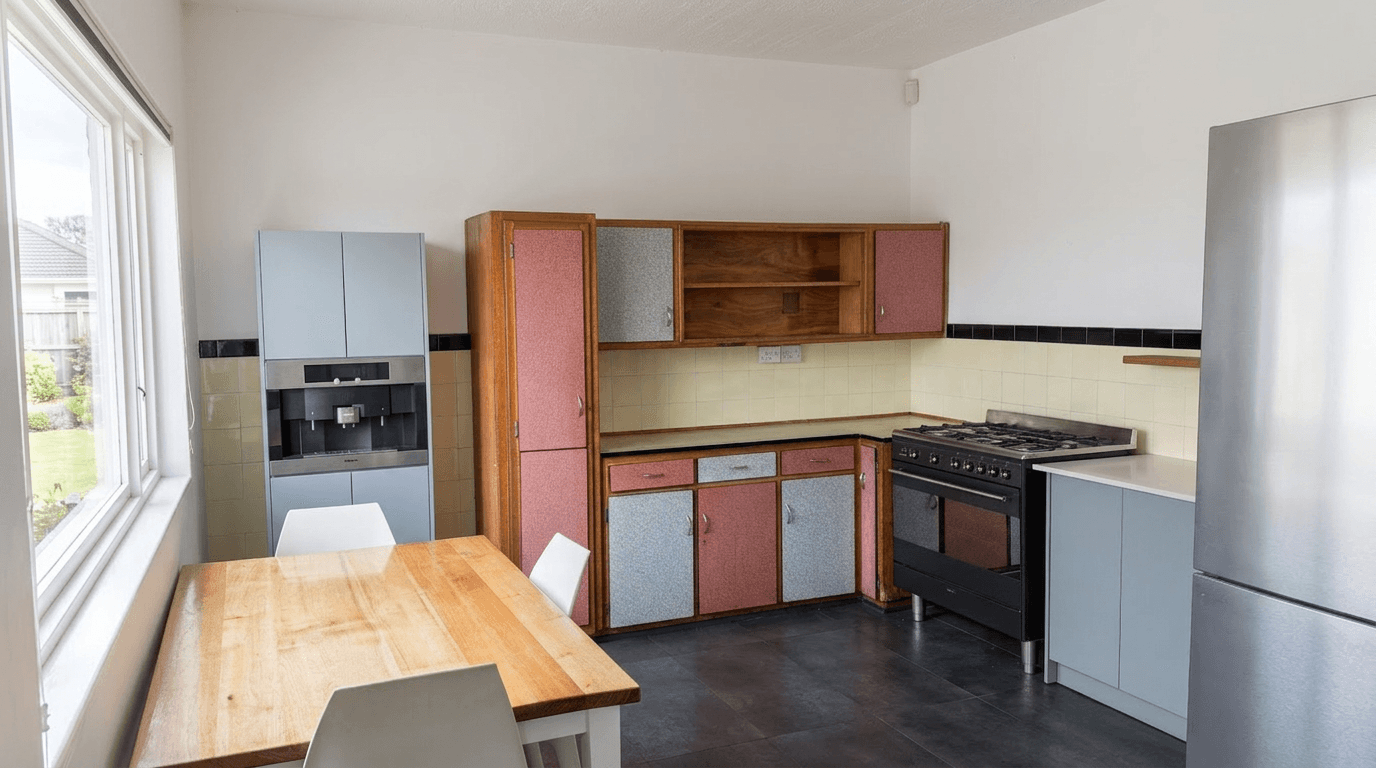
Lightroom vs AI Editing for Real Estate Photos: A Photographer's Honest Comparison
Lightroom vs AI for real estate photo editing, head to head: speed, quality, learning curve, cost, and when to use each in your workflow.
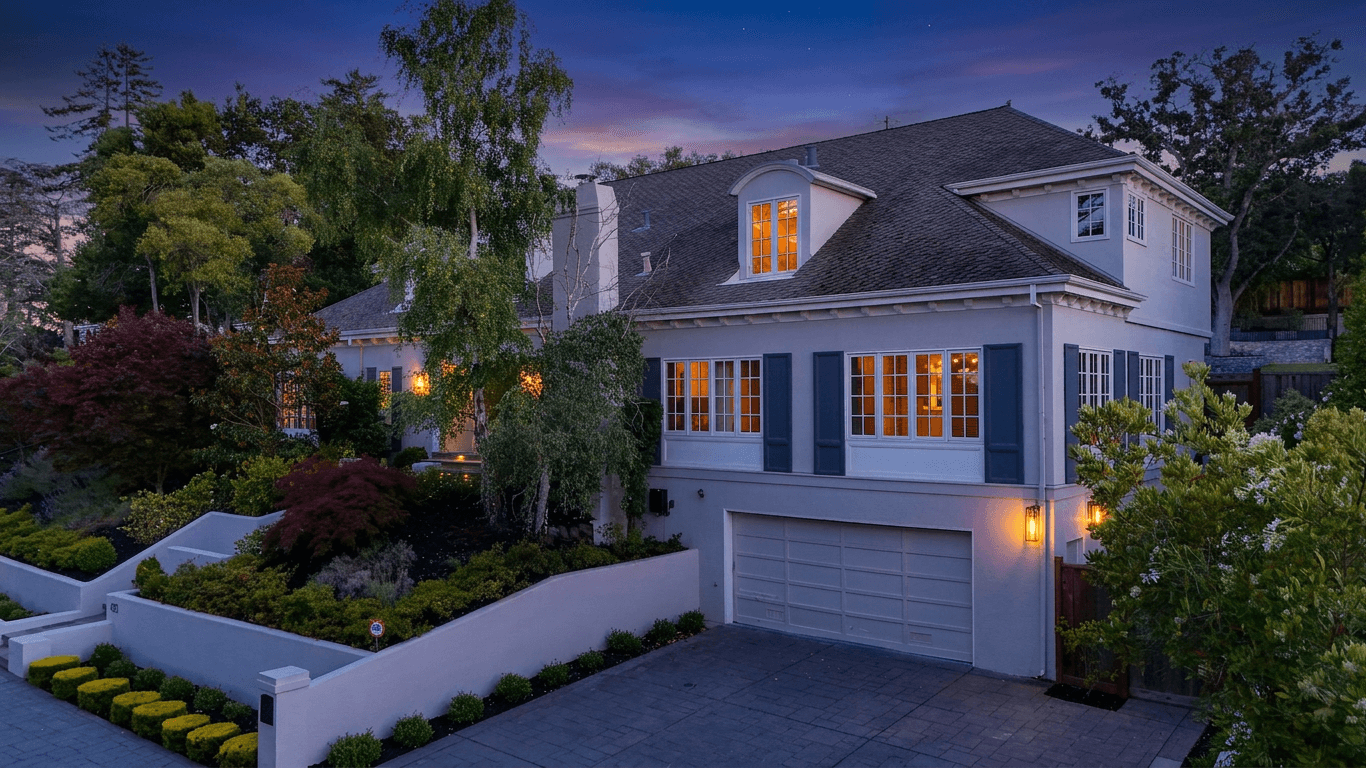
Real Estate Photo Editing Costs in 2026: DIY vs. Outsourcing vs. AI
A detailed cost breakdown of editing real estate photos yourself, outsourcing to editors, or using AI tools. Find the most cost-effective approach.