How Listing Photos Impact Sale Price and Days on Market: The Data
Research-backed analysis of how photo quality affects home sale prices, time on market, and buyer engagement. Data every agent needs to know.
Every real estate agent knows intuitively that good listing photos matter. But how much do they matter? What is the actual dollar impact of upgrading from average photos to great ones? And can you quantify the difference in days on market?
The answer to all three questions is yes, and the numbers are larger than most agents expect. In this article, we examine the research from NAR, Redfin, VHT Studios, and multiple academic studies to build a data-driven picture of exactly how listing photos affect sale price and time on market. We then translate those findings into actionable strategies for agents who want to use photography as a competitive advantage.
The Photo-Price Connection: What the Research Shows
Multiple studies over the past decade have examined the relationship between listing photo quality and final sale price. The findings are remarkably consistent.
The Redfin Study
Redfin's analysis of home sales data found that listings photographed with professional-quality DSLR images sold for $3,400 to $11,200 more than comparable listings with standard photos. The premium was proportional to home value --- roughly 2-3% above expected sale price.
For a $400,000 home, that translates to $8,000-$12,000 in additional sale price directly attributable to photo quality.
The VHT Studios Research
VHT Studios, one of the largest real estate photography companies in the United States, analyzed over 213,000 listings and found that:
- Homes with professional photos sold 32% faster than those without
- Professional photos correlated with a 47% higher asking price per square foot
- Listings with professional photography had a 1,200% higher click-through rate in online search results
The Wall Street Journal Report
A Wall Street Journal investigation into real estate photography found that homes listed with professional photos sold for between $934 and $116,076 more than similar homes without professional images, depending on the price range. The percentage premium was remarkably consistent: approximately 1.7% to 3.2% of the sale price across all market segments.
NAR Data
The National Association of Realtors reports that:
- 97% of homebuyers use the internet in their home search
- 89% of buyers found photos "very useful" in their search
- Listing photos are the number one factor that determines whether a buyer will view a property in person
Key Finding
Across all major studies, professional-quality listing photos consistently add 2-3% to the final sale price. On a $500,000 home, that is $10,000 to $15,000 --- an enormous return on an investment that typically costs $100-$500.
Days on Market: The Photo Factor
If the price premium of great photos is compelling, the days-on-market data is equally striking. Every day a listing sits on the market costs the seller money --- in mortgage payments, carrying costs, price reduction pressure, and the perception of being "stale."
Speed to Sale
The VHT Studios study found that listings with professional photography sold in an average of 32 days compared to 78 days for listings without professional photos. That is a 59% reduction in time on market.
The Cost of Each Day on Market
To understand why this matters, consider the cost of each additional day on market for a seller with a $400,000 home:
| Cost Factor | Monthly Cost | Daily Cost |
|---|---|---|
| Mortgage payment | $2,400 | $80 |
| Property taxes | $400 | $13 |
| Insurance | $150 | $5 |
| HOA/maintenance | $300 | $10 |
| Utilities | $200 | $7 |
| Total carrying cost | $3,450 | $115 |
At $115 per day in carrying costs, the difference between selling in 32 days versus 78 days represents $5,290 in additional seller expenses --- on top of the sale price differential.
The Stale Listing Effect
Beyond direct carrying costs, there is a well-documented phenomenon in real estate where listings that sit on the market for extended periods begin to attract lower offers. Buyers and their agents interpret time on market as a signal that something is wrong with the property or that the price is too high.
Research from Zillow shows that homes that have been on the market for more than 30 days sell for an average of 2.5% less than comparable homes that sold within the first two weeks. After 60 days, the discount grows to 4-6%.
This means that poor listing photos do not just delay the sale --- they actively erode the eventual sale price through the compounding effect of extended market time.
First Impressions in the Digital Era
Understanding why photos have such an outsized impact requires understanding how modern homebuyers actually search for properties.
The 97% Online Search Reality
When nearly all buyers start their search online, the listing photo is not just one factor among many --- it is the gateway to every other factor. If the photos do not earn a click, the buyer never sees the property description, the neighborhood details, the school ratings, or the price.
The 3-Second Scroll Test
Eye-tracking studies of real estate search behavior show that buyers spend an average of 3-7 seconds on each listing in search results before deciding to click or scroll past. In that time, they evaluate exactly one thing: the hero photo.
The hero photo --- typically the front exterior --- must accomplish three things in under five seconds:
- Stop the scroll. The image must be visually distinctive enough to interrupt the buyer's browsing pattern.
- Communicate quality. The buyer must immediately perceive the home as well-maintained and desirable.
- Generate curiosity. The image must make the buyer want to see more.
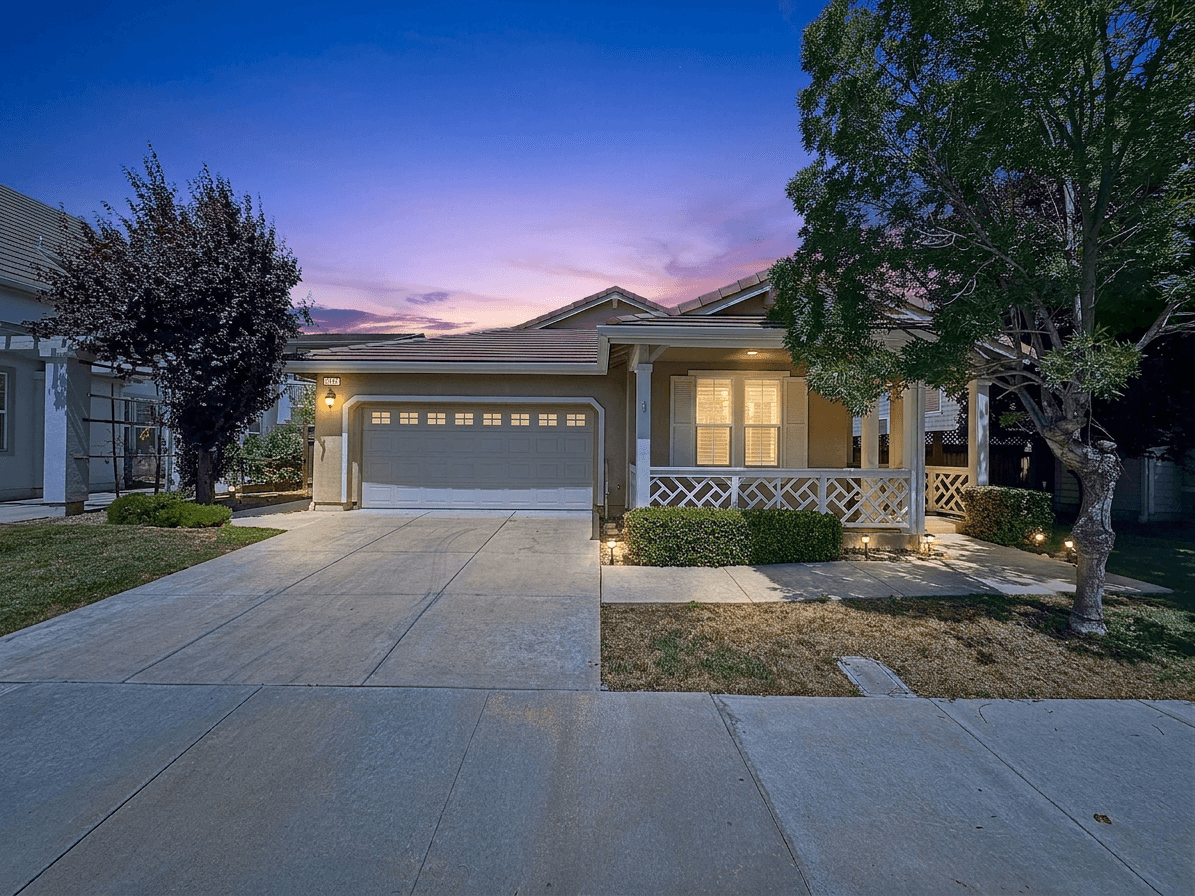
Twilight photos are particularly effective at all three because the warm, glowing exterior against a dusk sky is inherently eye-catching and signals premium quality. Our guide on twilight photography for real estate covers why this format consistently outperforms daytime exteriors.
Which Photo Edits Have the Biggest Impact
Not all photo improvements are created equal. Some edits have a measurably larger impact on listing performance than others.
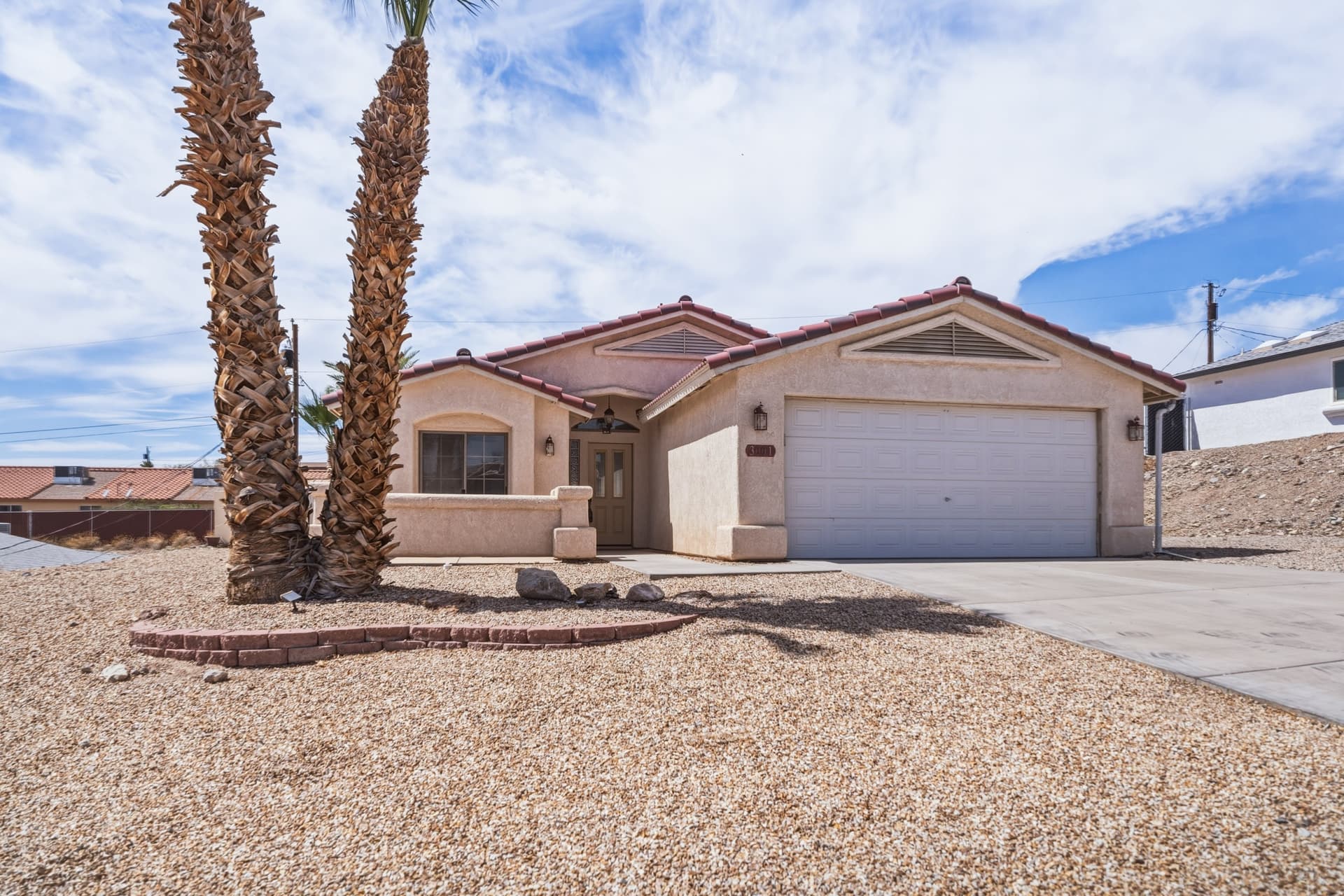
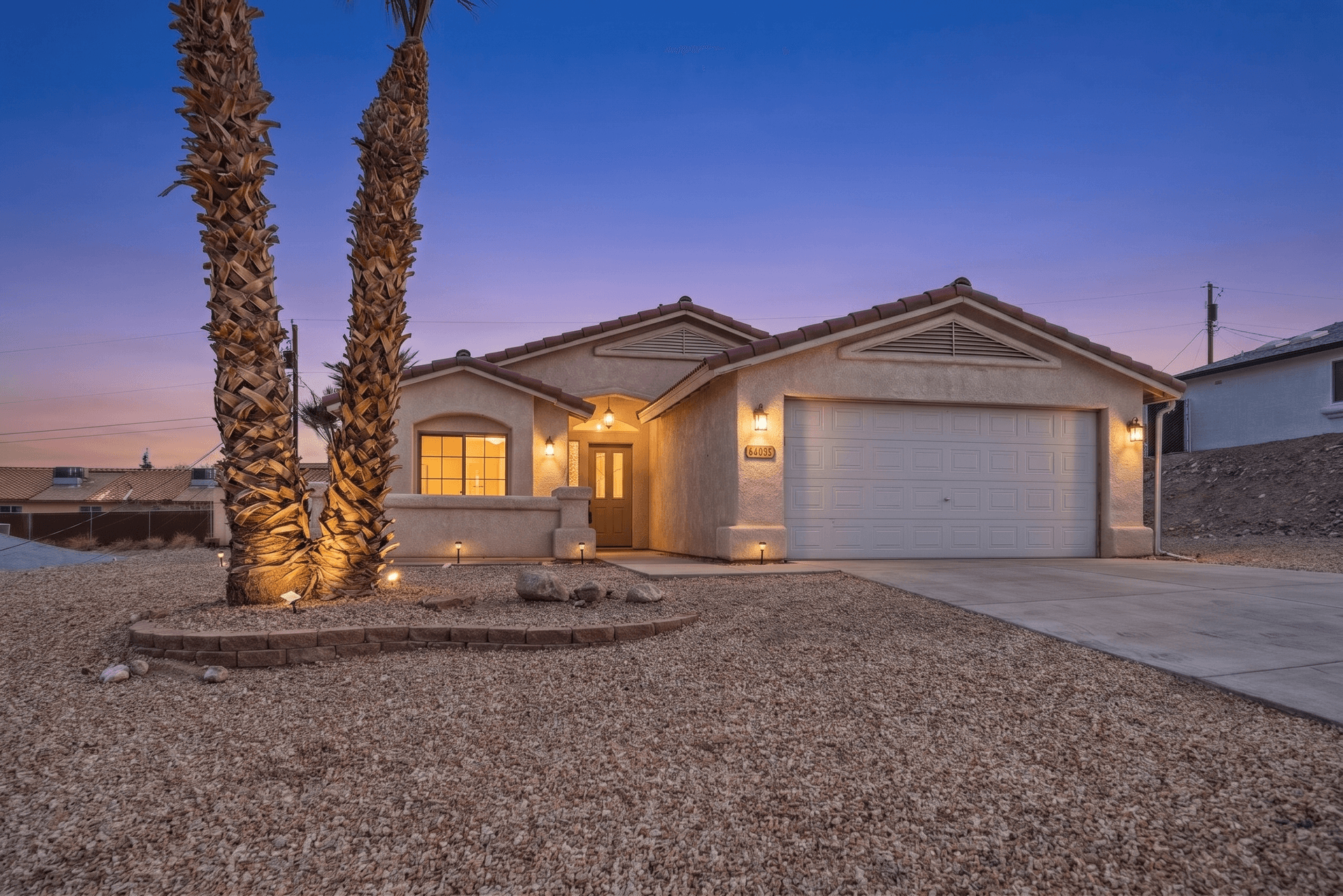
Twilight Conversion
Twilight hero images generate 50-75% more engagement than daytime exterior photos, according to data from multiple real estate marketing platforms. Listings led by a twilight hero image receive more clicks, more saves, and more showing requests.
The psychological mechanism is straightforward: twilight photos trigger an emotional response. The warm glow from windows, the dramatic sky, the sense of coming home --- these visual cues bypass analytical evaluation and create an immediate positive association with the property.
Bright and Airy Interiors
Interior photos edited with a bright and airy style consistently outperform dark or heavily processed alternatives. Data from A/B testing on real estate platforms shows that bright, well-exposed interior photos receive 20-35% more engagement than underexposed originals.
The bright and airy look makes rooms appear larger, cleaner, and more inviting. For more on this popular editing style, see our bright and airy photography guide.
Sky Replacement
Exterior photos taken under overcast skies underperform photos with blue or partly cloudy skies by 15-25% in engagement metrics. AI sky replacement solves this problem instantly, ensuring every exterior photo has an appealing sky regardless of the weather conditions on the day of the shoot.
Learn more in our sky replacement guide.
The Photography Investment Calculation
Let us build a concrete ROI calculation for investing in better listing photos.
The Scenario
- Property value: $400,000
- Current photo quality: Average smartphone photos, no editing
- Proposed upgrade: Reshoot with better composition + AI editing with Twilight
The Math
| Factor | Without Photo Upgrade | With Photo Upgrade | Difference |
|---|---|---|---|
| Expected sale price | $400,000 | $408,000-$412,000 (+2-3%) | +$8,000-$12,000 |
| Days on market | 45-60 days | 20-35 days | -25 days faster |
| Carrying costs (per day @ $115) | $5,175-$6,900 | $2,300-$4,025 | -$2,875 saved |
| Agent reputation impact | Neutral | Positive (faster sales, happier clients) | Compounding |
The Investment
| Approach | Cost |
|---|---|
| Professional photographer | $200-500 |
| DIY + AI editing (Twilight) | $5-20 |
| Time for reshoot | 1-2 hours |
Even at the high end ($500 for a professional photographer), the return on investment is extraordinary: $8,000-$12,000 in additional sale price plus $2,875 in carrying cost savings, for a total return of roughly $11,000-$15,000 on a $500 investment.
With AI editing, the numbers become almost absurd. A $10 investment in AI editing generates $11,000+ in value. That is an ROI exceeding 100,000%.
What Buyers Say
Survey data on buyer preferences consistently reinforces the quantitative findings.
Photo Preferences
A 2025 National Association of Realtors survey of recent homebuyers found:
- 83% said professional-quality photos were "very important" in their decision to view a home
- 68% said they had skipped a listing entirely because the photos were poor quality
- 72% said they would be willing to pay more for a home that was well-presented in photos
- 91% said the exterior/hero photo was the single most important image in a listing
What Turns Buyers Off
The same survey identified the photo characteristics most likely to cause buyers to skip a listing:
- Dark, underexposed photos (cited by 74% of respondents)
- Cluttered, messy rooms (cited by 69%)
- Poor composition or unflattering angles (cited by 58%)
- Overcast or gray exterior photos (cited by 51%)
- Inconsistent editing or mixed photo quality (cited by 44%)
Every one of these issues is addressable with modern AI editing tools. Dark photos can be brightened. Clutter can be removed. Overcast skies can be replaced. And AI presets ensure consistent editing across every image in a listing.
Case Study: Same Neighborhood, Different Photo Quality
To illustrate the real-world impact, consider two comparable homes that sold in the same suburban neighborhood within the same month.
Property A: Standard Photos
- Home: 3-bedroom, 2-bath ranch, 1,800 sq ft, updated kitchen
- Photos: 18 photos taken with a smartphone, no editing, shot on an overcast afternoon
- List price: $385,000
- Days on market: 47
- Sale price: $372,000 (3.4% below asking)
- Photo characteristics: Dark interiors, gray sky exterior, cluttered rooms, yellow color cast from indoor lighting
Property B: Professional-Quality Photos
- Home: 3-bedroom, 2-bath ranch, 1,750 sq ft, original kitchen (less updated than Property A)
- Photos: 24 photos shot with attention to composition, AI-edited with bright and airy interiors and a twilight hero image
- List price: $379,000
- Days on market: 11
- Sale price: $389,000 (2.6% above asking)
- Photo characteristics: Bright, consistent interiors, stunning twilight exterior, clean surfaces, blue sky in backyard shots
Property B was objectively a less updated home with less square footage. Yet it sold for $17,000 more than Property A and in one-quarter of the time. The primary differentiator, according to the listing agents, was the photo quality. Property B's listing attracted 4x more online views and 3x more showing requests in the first week.
Actionable Takeaways for Agents
Based on the research and data presented in this article, here are specific actions agents can take to leverage photography as a competitive advantage.
1. Treat Photography as a Non-Negotiable Investment
The data is clear: photography is not an optional marketing expense. It is the single highest-ROI investment in the listing process. Budget for it on every listing, regardless of price point.
2. Lead with a Twilight Hero Image
If you make one change to your listing photography strategy, make it this: ensure every listing has a twilight hero image. The engagement premium of 50-75% over daytime exteriors is too significant to ignore. AI twilight conversion makes this achievable for every listing without the logistical challenges of shooting at dusk.
3. Edit Every Photo
Uploading unedited photos to the MLS is leaving money on the table. At minimum, every listing photo should have brightness correction, color correction, and consistent processing. AI editing tools make this a 5-minute task for an entire listing set.
4. Aim for 25-30 Photos per Listing
Research consistently shows that listings with more photos perform better, up to a point. The sweet spot is 25-30 photos for a typical residential property. Every room should have at least one photo, key rooms should have 2-3, and exteriors should include front, back, and any notable outdoor features.
5. Update Photos Seasonally
The AirDNA finding that recently updated photos improve performance by 17% applies to home sales as well. If a listing has been on the market for more than 60 days, refreshing the photos can reignite interest and avoid the stale listing penalty.
6. Maintain Consistency Across Your Listings
As an agent, your listings collectively form your brand. Consistent, high-quality photography across all your listings signals professionalism and competence to both buyers and potential seller clients. AI editing presets make this consistency effortless.
The research is unambiguous: better listing photos lead to higher sale prices, faster sales, and more satisfied clients. In a market where the difference between a good photo and a great photo can be measured in thousands of dollars, the investment in quality listing photography is one of the smartest decisions an agent can make.
For a practical guide to implementing these strategies, see our step-by-step AI editing tutorial and our before and after gallery.
Related Articles
Property Management Photography: Systems for Consistent Listing Quality Across Portfolios
Build scalable photography systems for property management portfolios. Covers shot list templates, staff training, photo refresh scheduling, asset management, budget allocation, and AI batch editing for consistent quality across hundreds of units.
Real Estate Photo Editing Ethics: What's Allowed and What Crosses the Line
Navigate the ethical boundaries of real estate photo editing. Covers NAR guidelines, state disclosure requirements, the sky replacement debate, virtual staging rules, and a practical framework for staying on the right side of buyer trust.
Starting a Real Estate Photography Business in 2026: The Complete Guide
Everything you need to know about launching a profitable real estate photography business. From equipment and pricing to finding clients and scaling with AI editing tools.